
Understanding Pilonidal Sinus: A Comprehensive Overview

Introduction
Pilonidal sinus is a small hole or tunnel in the skin that can easily become infected. It usually forms in the natal cleft at the top of the buttocks. It affects approximately 26 people per 100,000 worldwide. Recognizing pilonidal sinus early is crucial for effective management and achieving optimal outcomes.
What is Pilonidal Sinus?
A pilonidal sinus is a hole in the skin that can become infected. It commonly develops in the natal cleft, near the coccyx.
Risk Factors
Gender: Males are more susceptible than females.
Obesity: Increased body weight contributes to its development.
Hair Characteristics: Coarse or thick hairs can exacerbate the problem.
Anatomy: A deep natal cleft is associated with a higher incidence.
Family History: There may be a genetic predisposition to pilonidal sinus.
Lifestyle: Prolonged sitting can enhance the risk.
Symptoms
Pain: Common initial complaint among patients.
Redness and Fever: Indicative of potential infection.
Pus Discharge: Suggests that an infection has developed.
Sinus Opening: Defines the physical manifestation of the condition.
Recurring Infections: Indicates the chronic nature of the issue.
Diagnosis
Clinical Examination: Initial diagnosis made by a physician.
Imaging Techniques: Ultrasound, CT scans, or MRI for further assessment.
Laboratory Tests: Blood tests to check for leucocytosis, which confirms infection.
Tissue Biopsy: Occasionally used to rule out other conditions.
Differential Diagnosis
It is important to differentiate pilonidal sinus from other conditions, such as:
Hidradenitis Suppurativa: A similar skin condition affecting glands.
Anal Fistulas: Abnormal connections between the anal canal and skin.
Crohn’s Disease: An inflammatory bowel disease that may present similarly.
Perianal Abscess: A collection of pus near the anus.
Rare Conditions: Such as sacral osteomyelitis and actinomycosis.
Management Strategies
Conservative Measures:
Local hygiene practices to prevent infection.
Hair removal techniques to reduce irritation.
Weight reduction for overall health improvement.
Adoption of an active lifestyle to decrease risk.
Surgical Options:
Incision and drainage for quick relief in acute cases.
Wide excision for a long-term solution.
Excision with primary closure to aid faster healing.
Transpositional flaps for complex cases.
Endoscopic pilonidal sinus treatment as a minimally invasive option.
Laser surgery as an emerging technique.
Case Presentation
Case 1
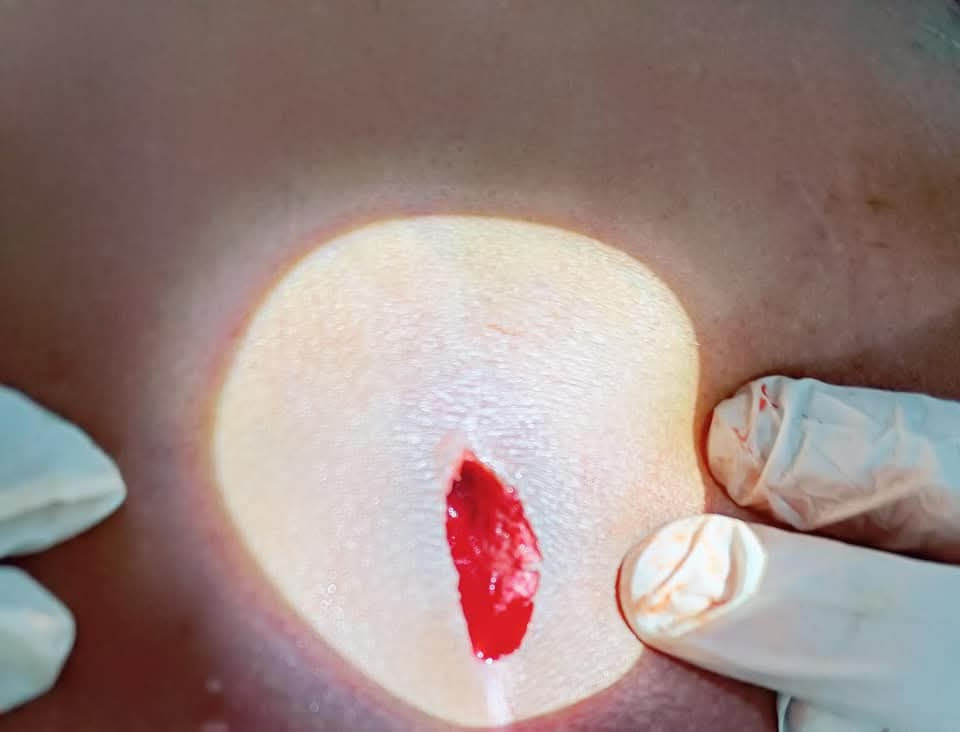
A 32-year-old male presented with pain and discomfort in the upper buttocks, associated with mild to moderate fever for 3-4 days. He also had a history of recurring infections in the same area for the past 3 years. Examination revealed redness, swelling, and tenderness at the natal cleft, suggestive of pilonidal sinus. A complete blood count showed leucocytosis, indicating infection. The patient was planned for wide excision of the sinus. After obtaining written consent, the procedure was performed under local anesthesia. Methylene blue dye was injected through the sinus opening to stain all sinus tracts for better identification. The sinus tracts were excised using electrocautery. The patient was discharged with oral antibiotics and NSAIDs and advised on further dressings. The wound healed completely within two to three weeks.


Case 2
A 22-year-old female presented with pain and discomfort in the upper buttocks for one week. Examination confirmed pilonidal sinus, and wide excision was performed without methylene blue dye staining as it was a small sinus tract.

Conclusion
Pilonidal sinus is a condition that can significantly impact quality of life. Early diagnosis and effective treatment are crucial. Individuals experiencing symptoms should seek medical advice promptly.
Final Thoughts
Awareness of the risk factors, symptoms, and management options for pilonidal sinus is essential for improving patient outcomes and quality of life.


I really appreciate your insights Dr.Dinesh Vats, the way you explain in an easy easy to understand manner.